24/2/20 – Final wrap ups and Launch lunch ideas

First of all, I have to say I am so incredibly proud of the group I’m in for the Launch project, as everyone has worked incredibly hard to make our publication what it is. Honestly, I couldn’t have ended up in a better team, so thank you so much guys ㅠ ㅠ ♡

But yeah, the team printed and bound our publications for the final submission and they look amazing!

We briefly discussed what to do for the publication launch. We will have 7 physical copies of our publication for the audience to read (as we made enough for each of us and 1 additional one for the group as a whole). Our idea is just to let audiences read our publication and strike up a conversation with them to hear what they think of when thinking about identity and how the surrounding might play a role in that and start a discussion.

As we’re not entirely sure about the logistics of the publication launch lunch yet, it’s hard for us to properly plan what to do for the event. Perhaps we can establish a dress code, but our publication is about ‘the self’, so dressing up similarly would counter that. Maybe we can get stickers or something made to distribute to the audience? Though I’m not entirely sure what purpose those might serve other than being there for the sake of being there. Maybe we can make name tags to fit the theme of ‘self’ stating ‘I am [blank]’, though how cliché would that be? We’ll need a proper ponder before the launch once we have more details about the day out.

19/12/19: Elevator pitch, SOI + feedback, time plan

As I am still unsure what my final outcome or outcomes will be, preparing the elevator pitch was a difficult task for me. Looking back on the feedback from Project Investigate, I identified ideas that were interesting and I wanted to expand more on and explore more. I also identified new ways of expressing oneself and that brought me at a bit of a crossroads, as I wasn’t sure whether to work on those more or focus on refining ideas and works from Investigate. In the end I have decided to focus on refining work, rather than experimenting with new things like performance or choreography, so as to actually be able to produce resolved works at the end of the project. I shall however keep those in mind for potential future works, as it does seem exciting, unique, personal, and interesting. 

My statement of intent

(I screwed up my first drafts and ran out of A1 paper, so had to resort to taping together A4 pieces of paper ^,^”)

The only thing I felt I was missing in my SOI was an image of how my comic draft looks like in order to visualise my idea. That would have cleared up some things, as I didn’t have time to explain the comic fully within the 1 minute of the pitch. As for the structure of my SOI, I wanted it to follow my own thought process a bit more, rather than follow more of a ‘headline – text’ structure. 

EVALUATION FEEDBACK TASKS

Following your elevator pitch you are to record, evaluate and analyse the feedback you have received. Go back to your SOI and make additions and changes in response.

I have sorted the post-it feedback into the following categories:

  • encouragements
    • Thank you for the encouraging words everyone, I really appreciate it ♡ Especially the A4 puzzle comment :’)
Encouragements (top 3), recommendations (bottom 3)
  • recommendations for other works
    • Will definitely check all of the recommendations out! 
    • Book: André Breton’s ‘Nadja’
      • The book starts with the question ‘Who am I?’, the question at the heart of my project. It’s a semi-autobiographical surrealist novel. 
    • Read: Asteryos Polyp
      • A graphic novel  by David Mazzucchelli. From Wikipedia (the most reliable source of information): “Ultimately, the book raises questions about how a person becomes who and what he is.” The style and use of colours is super appealing to me, so I will most definitely check it out! Thank you for the recommendation! (Also, I’m always open for more recommendations for graphic novels.)
    • Artist: Sophie Calle
      • This bit of biography on her certainly sparks my interest. Especially the aspect about the blurred lines between the intimate and public.

“Sophie Calle is a French artist who has exhibited extensively throughout the world since the late 1970s. Variously described as a conceptual artist, a photographer, a movie director, and even a detective, she has developed a practice that is instantly recognizable for its distinct narrative elements and frequent combination of images with text. Each of her projects can be seen as a chapter in a vast overall volume of references and echoes, in which Calle often blurs the boundaries between the intimate and the public, reality and fiction, art and life. Her work methodically orchestrates an unveiling of reality—her own and that of others—while allocating a controlled part of this reality to chance.”

From: https://www.perrotin.com/artists/Sophie_Calle/1#biography 
  • recommendations/ideas for my own works
    • “Idea! Interview people around you (parents + childhood friends). Work with memories.”
      • I did think about doing that, to see how they view me and who they think I am and compare and contrast it with how I perceive myself. It is said that a different you lives inside every person. So, I think I might do that over the Christmas break when I’m back home. 
    • “Maybe collaborate with an illustrator to include in the writing”
      • I was personally planning on drawing the comic myself.
    • “Pop-up/interactive aspect?”
      • Hmmmm… interesting. I can’t really imagine how to do that, but it would add another element to my works.
    • “Let others record you”
      • Again, going back to the aspect of how other people see me as, but this time giving them the autonomy… Cool!
    • “Your comic book did look good! Can’t wait to see the refined version 🙂 Could you create physical letters and send them out to the world without any link to yourself? Post them without stamps to invented addresses?”
      • Thank you for the nice comment ♡ Oeoeoeh, I like those ideas! On the one hand I worry about involving someone who didn’t consent to be involved into my work, no matter how inconsequential it might be, as I don’t know who those letters might reach, especially as the content of those letters is meant to be personal and open. There is also a sense of… almost knowing with a fictional character. It’s not a complete stranger, just someone who cannot respond or receive the letters. The idea is certainly interesting however and might be a cool project to spread openness. It reminds me a bit of the Cameramail project by Matthew McVickar in which he sent a disposable camera around the world asking people to take a picture before sending it back to him. As for the invented addresses, I like how it gives the fictional characters almost a sense of physicality and realness. (Might steal the idea :P)
  • questions
    • Who are we?? Are they coded? / Who are the main characters in your book?
      • Here I wish I included an image of the comic draft in my SOI, as it would have cleared up these questions. But the comic will be about me and my own sense of identity and what I feel like I get my sense of identity from most. 
    • How to make the work relatable? 
      • That is a tricky question and I guess a tricky question for any work that deals with the artist in question as the focal point of the work. I want to keep my own work as open as possible and pass off the questions to my audience: who are you and where do you gain your sense of identity from? During the final crit, it seemed like many people face the same questions and issues: Who are we truly? Can we be ourselves and express ourselves fully? etc. I want my works to be open to these questions and assure everyone that it’s alright to not know the answers to them fully. 
  • suggestions for further research
    • “I want to see the friction between confidentiality & publication of work. All the best ♡”
      • Me too, commenter, me too. A fascinating dichotomy that I hadn’t even really thought about before. 
    • More research.
      • Succinct and to the point. But more research into what, commenter?
    • “Explore relatable complexities(?) in emotional & social human aspects”
      • As I understood this comment, it’s about shared personal experiences from various aspects of life. Discussing what was meant in this post-it note with Nayana, she recommended I read ‘The Argonauts’. 

Please read the following subject area categories. Select one or more category and use it to reconsider your SOI from a new perspective:

Audience

Who will be my audience and how can I reach them? Those are good questions indeed and not something I had considered before, really. I imagined my audience to be quite broad, but I also know that not one work can reach everyone or appeal to everyone.

The comic I imagine will be put in the publication for Project 6, whatever format or medium that publication will take. I also considered posting it on Instagram to reach a wider audience. While the comic is about me and my own sense of identity, I do want to pass the question onto the audience: what defines you? The way my personal memories, interests, and experiences made me, those same aspects apply to everyone else.

On the other hand, the letters I write to a fictional character aren’t meant to be read by anyone. How can I appeal to an audience that I reject? How can I even show that work to my audience? And how will they perceive my work as: alienating? Obscure?

Thinking about audience, it does make me wonder what the whole point of my outcomes will be. Why should my sense of self, my interests, and my feelings matter to other people? Do they even matter? I want to believe they do, even just a bit. Telling each other about our own experiences is what shapes the world and connects us to others. It’s how we learn and grow. Telling stories is what shaped our societies and cultures. It’s practically ingrained in our being human. Empathy goes a long way, in my opinion, too.

Write a list of tasks and research that you need to follow up on over the Christmas break.

  • Finish my practitioner essay draft
  • Draw the refined version of the comic (digitally using Photoshop)
  • Do some web research into the notion of the self for the essay/article for this project
    • Decide on whether I want to write an essay or article

Time-Plan: Using the template provided in the SOI handout draft a working time-plan to manage your time effectively. 

It was incredibly hard for me to make a time plan, as I have not concretely decided what my final outcomes will be, so it’s hard to plan for something you’re not sure of. I shall work on this over the Christmas break.

Overall, this was an interesting task and does put the work I need to do in perspective. I’m curious how my SOI shall change and develop over time and what it can say about my own way of working.

Anyways, I wish y’all a Happy Christmas and a wonderful New Year! ^ω^ The past half year has been incredibly exhilarating, challenging, and just straight up fun. Here’s to a new year full of that! And good luck with your work too! ❄️

27/11/19 – The Cartoon Museum visit and on comic book artists

The Cartoon Museum was very nice. Perhaps I should consider volunteering there once?

My problem with choosing a practitioner for my essay is that I for one have commitment issues and am bad at making decisions. But also, I would like to write my essay about someone that relates to my practice for stage 2. And that is the crux of my predicament: I don’t know what to do. 

Also an issue with comic book artists and writers is that, unless they are indie/alternative comic artists and writers, they usually work under a bigger company (DC/Marvel/Vertigo, etc.). One can wonder about how much creative freedom they have under said companies (especially for emerging artists). And also, does the work they produce under said companies contribute to their wider oeuvre? Or can they be classified as a means to provide food on the table? The flip side of a big publisher is that works published via them can have a wider reach and can be thus more accessible and well-known. What I’m trying to say is: I am having a hard time picking a practitioner for my essay, even when narrowing the topic down to comics.

And I guess another complication is the fact that a lot of comics have a different artist and writer. Does one talk about the art or the story? Both elements are crucial in a comic book and are very interconnected. The writer needs to relay their ideas well to an artist and the artist needs to realise those ideas in the form of drawings. But the writer also needs to leave space for the artist to flourish, both metaphorically, as well as physically. 

The UK Comics Laureate exists. The first person to receive it was Dave Gibbons who is the artist of Alan Moore’s The Watchmen. Honestly, I couldn’t think of anyone better suited to be the first Laureate holder. His work is so famous and influential and etc. The Watchmen especially was a famous and medium shaping work that, along with The Dark Knight, shifted the perception of comics, and especially superhero comics, from childish to something serious and worth artistic merits. 

The second was Charlie Adlard, artist of The Walking Dead by Robert Kirkman. He himself described feeling not particularly worthy of the title in a sense, but did advocate for comics as a form of literature for children with dyslexia as his own son is dyslexic. 

The current holder of the laureate is Hannah Berry. I hadn’t heard of her before this, but I got her debut graphic novel Britten and Brühlightly and it is a stunning piece of work. A noir detective story starring a depressed man in a midlife crisis feeling the weight of the lives he has ruined on his shoulders stronger than ever taking up a case in the hopes of at last not break someone’s heart. The amount of work that must have been put into writing and painting the comic is highly impressive! I am curious to check out more of her work, especially Likestock.

22/11/19 – ‘Epic Fail’: A bout of sad and the beauty of the every day

I’ll be straight up honest here: the past 3 and a half weeks I’ve just been feeling sad and unmotivated and I’ve been crying nearly constantly. Partly it is due to stress of submissions and the consequent feeling of failure after not being able to deliver what I wanted to in the previous half of the course. Partly it is due to something so inconsequential in the grand scheme of things and life, but something that affected me more than I could ever imagine, all just because of a K-pop idol I like and admire from a K-pop group that I realise is a bigger coping mechanism to me than I ever imagined they would be. Partly it is likely due to some form of SAD, seasonal affective disorder, deciding to screw up my life a bit more, as nearly every winter I experience a bout of melancholy at some point. Lately it has been because of my lack of a dream or personal goal for the future and the anxiety that comes with the feeling of being a failure and a disappointment. 

I started writing this post yesterday, after a particularly hard bout of melancholy hit me. Coincidentally enough, today’s lecture was about failure. When we were asked to talk about a failure of ours I jokingly said that I myself was a failure and promptly started tearing up. I envy people with a dream a lot. I wish I had a personal passion bright enough to fuel my work towards said goal. Be it a practice I want to pursue or a topic I want to be the red thread weaving its way throughout my life, I just want to be able to hold onto something in this swirling chaos of uncertainty. Anything is better than nothing. Failing at achieving a goal is better than having no goal at all. I’m failing before I can even start failing. Is that not the ultimate failure?

I contemplated yesterday about this and have reached a metaphorical fork or wall in my thinking about life. Does life get meaning from the pursuit of a dream or does it get meaning at the end when looking back at reached achievements (however big or small said dreams or achievements are)? Is not having a goal in life bad in and of itself or is it merely bad because it is not supported by this capitalist rat race mentality we are supposed to have? Who or what am I supposedly failing by not having a dream? Is it myself? But how can I fail myself by not knowing what I want to do? Am I failing my parents? To a certain extent yes, but they have also expressed that most of all they want me to be able to live a life I want to live and be happy. (Getting a masters would be desirable however. :’)) Am I failing life itself? What is the purpose of a life if not to live it, but how does one live it fully? Who is the judge of my, or anyone’s, life? 

I was considering how stories reflect our thinking about what a life is supposed to be. Is the media we consume (un)consciously telling us how to live a life? Are we meant to be the heroic main characters in our lives, resolving conflicts and building tension, living a three act structure, in the end winning or losing depending on what kind of epic story it is? Or is that same media a means of escape from a life that does not contain any of those? Our fascination with celebrities and millionaires, unordinary people living unordinary lives, my own love of K-pop idols. All that to distract us from a life that we might not consider to be worth as much as those other people’s lives. But just as I love these idols that are seemingly ‘perfect’, I most of all love seeing them doing ordinary things: eating food, playing games, making jokes, things found in the every day lives of people their age, showcasing that they are still just ordinary people. If I can appreciate the day to day of these other people, why not in my own life? I was reminded a movie I like a lot: Paterson by Jim Jarmusch. I initially just watched it because it stars Adam Driver and I quite liked Only Lovers Left Alive, another movie by Jarmusch, but watching the movie I found a serene beauty in it. 

From: IMDb

The movie shows a week in a bus driver’s life, a bus driver who also likes to write poetry. Initially I thought the movie would do something with the poetry, maybe make the publication of his poems the main issue in the movie and while it is mentioned in the film, my expectations were flipped on their head, as the movie didn’t follow that path and is indeed merely that: a week in his life. No three act structure, no conflict (or at most, his thinking about getting twins for kids), and most of all the main character, Paterson himself. He had no further ambitions aside from just living his life. He didn’t want his poetry to be more than just poems he writes for himself. He didn’t have big goals in life and is living a, in my opinion, fulfilled life with a beautiful wife and a stubborn little dog. It was such a refreshing movie in its simplicity and its depiction of the beauty of little every day things, something that also struck me in Only Lovers Left Alive (the scene of these centuries old vampires still being amazed by a simple mushroom). The mundane transforming into the sublime. A depiction of a life most people could relate to. 

That also made me think of slice of life anime: a genre of anime that don’t really have a structure with an overarching arc, much conflict, etc. Instead, the genre focuses on the day to day events of a mundane life. It is however a genre that is quite popular. Could media like that be a means of escape from a life that is full of expectations to meet? Watching something about a life we can relate to? The popularity of vloggers, too, might be an indicator of the need for relatability in our media consumption. Can we sense a shift in media we consume and want to consume and more interestingly, is it an indicator in shifting perceptions of what living entails? A shift from watching something we cannot achieve, but want to, to watching something that can be achieved and feeling satisfied with it. 

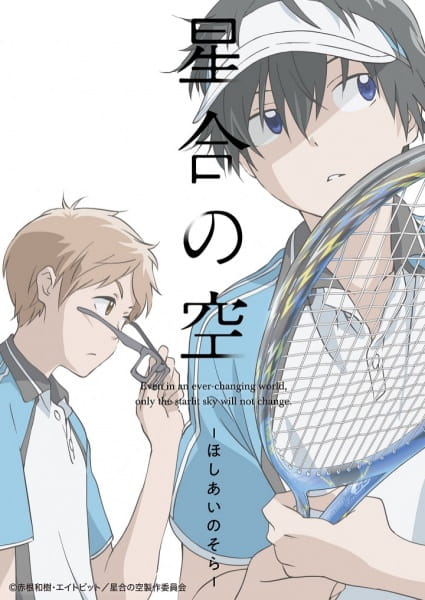
A currently airing anime that I started watching is Hoshiai no Sora/Stars Align. It is not what I would really call a slice of life anime, even though it is categorised as one on MAL. Rather it is a sports anime, more specifically a tennis anime. However, unlike most sports anime, which tend to focus on becoming the best and winning competitions, showcases a very mundane depiction of a high school sports club. Yes, they are working on winning a competition, but not for glory. Instead, it is merely so the club doesn’t end up having to disband. Most importantly, and most surprisingly, though, it depicts lives that aren’t picture perfect or how they are expected to be in a lighthearted sports anime, as all characters face difficulties in their lives, be it their family situation, anxiety, or bullying. A very mature, realistic, and important depiction of life. The soft ball tennis club thus shows the importance of having people around you that support you fully and are open and understanding and how together you can work to overcome such harrowing events. Needless to say, I highly recommend everyone to watch it!

In the end, there is no real point to this blog post other than just air my own feelings and consider what I want to do in life. As an ending message I just want to wish good luck to everyone pursuing their dreams, but to those who don’t have any like me, to take it easy and that life will surely figure itself out. While you might not see much progress in the day to day, after a long period of time, you’ll look back and see that you’ve grown. You are not a failure. 

(Now if only I can listen to my own advise… 😅)

11/11/19 – Stage 2 Project 4 Brief

Today was the start of Stage 2 and Project 4: Investigation. The structure of Stage 2 seems very interesting and is I guess the real test to see if a Masters is something for you. It is much more self driven and directed, which is both exciting and dreadful to me.

The brief for Humanities is:

“Identify an area of investigation form your previous projects that you would like to explore through self-directed practice. Develop a folio of investigative writing (1500 words) exploring preparatory ideas that will lead to a finished piece in Project 5. The folio should contain a number of short texts that test out and develop a variety of approaches and include visual references/support work. For example, identify an area of art and design practice that fascinates you, or a particular topic of interest in art/design/cultural/political fields. Your task is to produce and extensive body of speculative writing that explores your concerns in a range of ways; this may include critiques, experimental prose, site writing, poetry, interviews, reviews, narratives, scripts, essays, or other modes of writing. Consider how your investigations could be supported by methods such as drawing, photography, derivés, games of chance, video…”

Project 4 brief, November 2019

The brief lines up with my wish to explore more different ways of writing, so that is awesome. Especially comic book writing with the last point of how the writing can be supported with images. Kyunghwa suggested during my Stage 1 feedback session with her that I research different types of comics (European, American, manga, etc.) and see how the writing in each differs from each other and how the writing is used in conjunction to drawings. 

As for the topic of interest, the research proposal I wrote for the last project can be a helpful starting point to consider, but I’m not entirely sure if I want to commit to that topic. My indecision is killing me already. I’ll have to consider what topic I want to focus on.

Another part of Stage 2 is the essay on a contemporary practitioner in your field. I’ll have to find practitioners of interest, and find them soon and make a decision. If possible I’d like to finish the essay draft before Christmas…

Another point of consideration is my feedback for Stage 1. The main point is that I don’t really showcase any of my thinking and making progress, which is what I already knew would be the main crux of feedback. It is something I struggle with, as my own way of thinking and working things out happens a lot internally and then through spooky magic, something gets produced. I shall really make it a point to blog as much as possible from now on, despite how much I might struggle with it. I should also show my notebook more, no matter how self conscious I might feel about it. Also I should document my research better and use as many resources as I possibly can, as the RCA is full of them; from physical resourced like the library, to my peers and the tutors. 

Lastly I just wanted to briefly something that struck me during Isabel’s presentation of her work. The work she presented were snippets of conceptual drawings from Architype (I believe), originally drawn in front of their client on a 12 meter long scroll. It was ’12 meters of ideas’ and it made me think about measuring things differently. 

  • It made me think of the song ‘Seasons of Love‘ from the musical Rent talking about how to measure a life in time, coffee cups, love, etc.
  • Last week I considered the passing of time reflected in the growth of my own body: how 2,5 years is only 40 cm of hair growth, how 10 years is the time it takes for almost all cells in your whole body to replace themselves. 
  • I’m not exactly sure what to do with it, but as it stuck out to me, it might be something worth considering maybe.

Overall, a lot on our plate to think about and do, but an exciting prospect nonetheless.